A permanent whole-house standby generator relies on immediate automatic engagement to protect a property from prolonged power loss, carbon monoxide risks from alternative portable systems, and utility backfeeding hazards. When this permanent backup infrastructure (designated under code S02C03.01) fails to respond during a grid failure, it leaves critical appliances vulnerable and indicates a breakdown in the system’s core automation circuit.
The Safe/Unsafe Verdict
A whole-house standby generator is safe to run only if its automatic transfer switch cleanly isolates the home panel from the utility lines and the engine maintains a steady 60Hz frequency under load. If the unit smells of electrical fire, suffers from severe engine hunting, or backfeeds power to the grid, it is unsafe and requires an immediate manual shutdown.
Immediate Safety Status
- Do not touch the generator cabinet if you observe standing water around the concrete mounting pad or notice active fuel line leaks.
- Stay clear of the engine exhaust port area to avoid lethal carbon monoxide accumulation and extreme thermal burns from the engine header.
- Verify the utility main status at the primary transfer switch panel before opening any low-voltage control bays.
- Keep the air intake louvers completely clear of yard debris, snow buildup, or plant growth to prevent sudden engine suffocation.
Symptom Branching: Low vs. High Risk
- Low Risk Scenario: If the generator exercises normally during its weekly scheduled run but displays a minor yellow maintenance light on the digital controller interface, the immediate threat is minimal. The unit will likely start, but the battery cell condition is declining.
- High Risk Scenario: If the generator engine cranks repeatedly but fails to start during an actual blackout, or if the automatic transfer switch clicks without throwing the mechanical contactor arm, the system is down completely. This leaves your main electrical panel unpowered and risks contact damage if the coil remains continuously energized.
System Analysis (The “Why”)
A standby generator serves as an automated power plant that mirrors the utility grid’s delivery parameters. The automatic transfer switch acts like a mechanical scale, keeping the utility line on one side and the generator supply on the other. Under normal conditions, utility voltage holds the primary contactor closed, channeling electricity straight to your home circuits.
When the grid drops, the logic controller monitors the loss of line voltage and counts down a brief delay to avoid false starts from temporary utility sags. Once the delay expires, the controller sends a 12-volt signal to the starter motor, firing up the engine. As the alternator reaches its operational speed, spinning at a precise 3,600 RPM to create a balanced 240-volt output, a control wire signals the transfer switch solenoid. The switch instantly drops the incoming grid line and snaps over to the generator side, completing the chain of power.
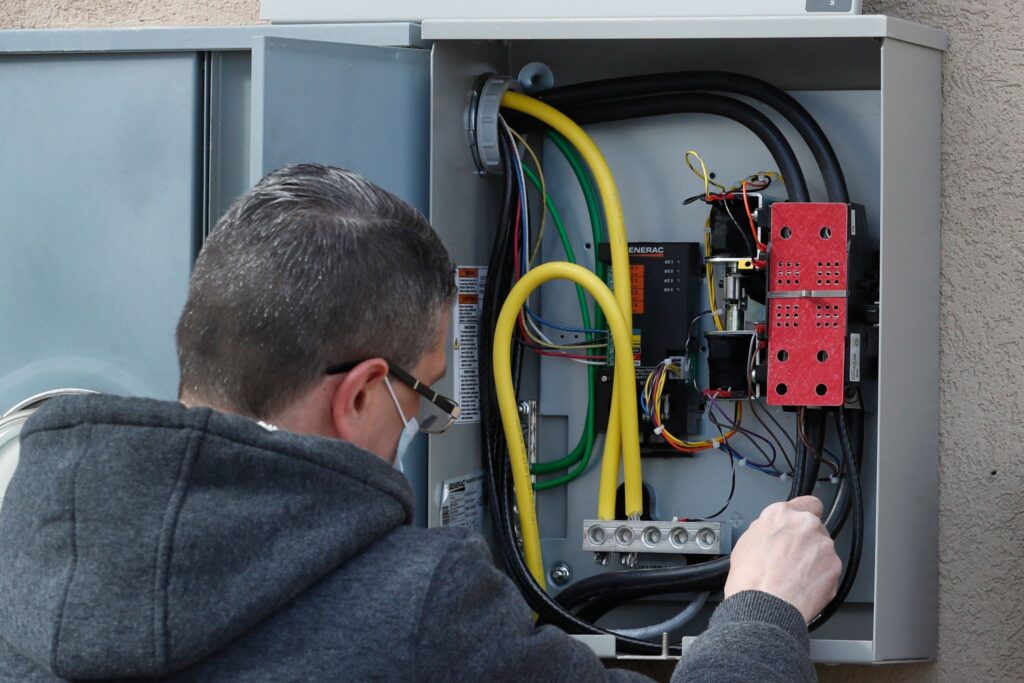
Automatic transfer switch interior terminal connections. Source: George Frey / Getty Images
As seen in the installation above, the incoming service conductors must route cleanly into the heavy terminal lugs of the automatic transfer box. If any of these mechanical control wires or heavy-gauge power lines loosen from vibration, the logic board will fail to coordinate the crossover sequence between the standby engine and the household panel.
The Most Likely Culprit
When a permanent standby system fails to execute its backup sequence, the failure probabilities typically break down into these distinct categories:
- 60% Confidence Range – Dead or Failing 12-Volt Starter Battery: The integrated trickle charger has failed, or the lead-acid battery has suffered internal cell degradation, leaving it without enough cranking amps to turn the engine over under automated command.
- 25% Confidence Range – Contaminated Fuel Regulator or Low Pressure: Solenoid valves on natural gas or liquid propane lines fail to open fully, or the gas supply pressure drops below the required 5 to 7 inches of water column.
- 15% Confidence Range – Corrupted Logic Controller or Blown Control Fuses: A high-voltage line surge from the utility grid has damaged the microprocessor or opened the internal 7.5-amp inline control fuses.
The Cost of Delay: 1hr → 24hr
- 1 Hour Mark: The house remains entirely without emergency power. The engine starter motor may overheat if it is stuck in a repeating, un-cleared cranking loop.
- 4 Hours Mark: The home’s interior temperature begins to drift, putting basement sump pumps at risk of overflowing and food inside refrigeration units at risk of spoiling.
- 24 Hours Mark: Prolonged cranking failures without manual intervention can drain the starting battery down to zero volts, causing permanent plate damage and necessitating complete battery replacement. Uncontrolled fuel delivery lockouts can gum up high-pressure regulators, compounding the basic repair scope.
Diagnostic Differentiators
You must quickly narrow down whether the issue is an engine mechanical problem or an electrical transfer fault. If the generator engine roars to life and runs smoothly but the home remains dark, the engine is delivering the necessary energy, but the transfer mechanism has failed to switch the load. You can read more about tracking down this specific mechanical disconnect at Engagement Faults: Transfer Switch Not Switching to Generator Fix.
If the engine refuses to spin at all when you manually press the start button on the digital pad, the failure is isolated to the 12-volt starting circuit, safety sensors, or the internal controller logic rather than the high-voltage alternating current delivery system.
The “Right Now” Protocol
- Walk out to the generator cabinet, open the main hood, and switch the primary rocker toggle from “AUTO” to “OFF” to prevent the starter from cycling continuously.
- Locate the manual disconnect breaker on the side of the generator housing and flip it to the “OFF” position to isolate the alternator.
- Check the gas shutoff valve on your fuel supply line to verify that it is fully open parallel to the piping.
- Inspect your main household electrical panel to see if any secondary subpanel feeds have tripped due to overload during the initial power drop.
Red Flag Stop Triggers
WARNING: ELECTRICAL AND MECHANICAL HARD-STOPS
- Raw Fuel Odors or Puddling: Indicates an active leak in the liquid propane lines or a cracked natural gas regulator seat.
- Heavy Black or White Smoke from Exhaust: Signals a major timing malfunction, engine oil blow-by, or severe fuel-to-air ratio faults.
- Loud Screaming or Metallic Grinding: Indicates bearing failure inside the alternator end or starter motor gear binding.
- Ozone or Burning Insulation Odors: Signals an active short circuit inside the main stator winding or the control panel bay.
The Professional Inspection Path
A certified field technician will deploy specialized analytical tools to diagnose a permanent system failure. They will use a true-RMS digital multimeter to measure cranking voltage drop directly at the starter terminals. A gas pressure manometer will be connected to the fuel test ports to ensure the supply maintains its required pressure under full engine load.
To evaluate the health of the electrical output, they will connect a portable resistive load bank to run the engine at 100% capacity, checking the health of the windings without endangering home electronics. Finally, they may use an insulation tester (megger) to check for insulation breakdown in the underground conduits linking the generator to the house.
Estimated Repair & Replacement Cost
- Minor Service ($150 – $300): Installing a fresh 12-volt engine starting battery, replacing blown 7.5-amp control fuses, or updating corrupted controller firmware.
- Moderate Repair ($450 – $950): Replacing a failed natural gas fuel lock solenoid, replacing a malfunctioning battery trickle charger module, or swapping out a damaged engine starter motor assembly.
- Systemic Overhaul ($1,500 – $4,000): Replacing a completely burned automatic transfer switch control board and contactor assembly, or rebuilding a damaged alternator stator end.
Symptom Escalators
If you find that the generator engine cranks energetically but fails to fire up, your root issue is likely located in the 12-volt support infrastructure. Explore our detailed electrical breakdown at Cranking Failure: Standby Generator Battery Issues. If the engine runs perfectly but fails to energize your subpanels, the problem could be a loss of residual magnetism in the rotor; read how to diagnose this at Output Loss: Generator Running but House Not Getting Power.
Final Circuit Check
A permanent standby system provides ultimate peace of mind only when every link in its automated sequence triggers flawlessly. If your unit suffers from sudden starting failures or won’t transfer power during a major grid drop, shut the unit down at the panel and call for professional service. Regular testing and proactive battery maintenance ensure that when the grid drops, your home’s chain of power snaps over safely without a single dangerous hitch.